
Size Matters
With Corgis, smaller, is better.
The Pembroke Welsh Corgi breed, is a dwarf breed, selectively bred to be dwarves, and meant to be kept small. They are one of only a few dwarf breeds; this includes such breeds as Dachshund, Basset Hound, Bulldog, French Bulldog, Petit Basset Griffon Vendéen, and of course, both the Pembroke Welsh Corgi and Cardigan Welsh Corgi. Dwarfism can occur in individual dogs of any breed, but for this discussion, we are sticking to the breed close to our hearts, the Pembroke Welsh Corgi.
The term, Corgi, is actually said to come from Welsh words, meaning, dwarf dog.
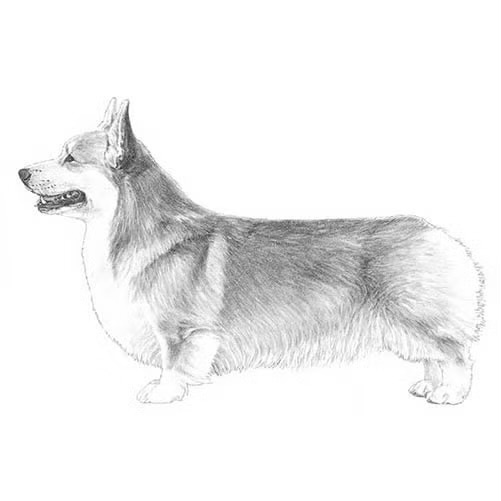
Not only is it historically known that corgis were selectively bred to have dwarfism, it’s genetically proven. Dwarf breeds, such as corgis, have the proof in their genes. The Chr. 18 FGF4 Retrogene, to be specific. Those dogs that have the “I” on both alleles, as opposed to the “N” (which would result in normal length legs) are genetically predisposed to having chondrodysplasia. In other words, short legs. All of Diamond K Corgis’s dogs test genetically as “II” for this gene, while not the “NN” or even “NI”, which would be “normal” or “carrier” respectively for other breeds, it is normal for this breed.
Citations : Parker et al 2009, Bannasch et al 2022
In our research of this breed, starting more than 20 years ago now, when we transitioned from raising bird hunting dogs, to Corgis, we found that many “modern day breeders” were pushing their genetics (through selection) into larger weights and sizes. We saw many corgis out there that were 40 pounds, even 50 pounds. Some of these were truly obese. And while some that were only 40 pounds weren’t “overweight” for their frame, we still saw health issues in those individual. While bigger boned, they were still too large for a dwarf breed that has short legs and a long back.
Body condition and body condition scores based on indviduals corgis is yet another discussion we’ll get more in depth on in the future. For now, we’ll stick with the high-level concept of large/overweight vs small/lean corgis.
Being overweight leads to a multitude of health issues, impacting nearly every part of their body and every body system within the dog. It impacts their organs, their bones, their joints, their muscles, their tendons, it even impacts their mental and emotional states. And who can blame them? An overweight corgi is often in pain, and a corgi in pain, is usually unhappy. But most importantly, overall, these all lead to a shortened lifespan.
Like most Corgi owners, we wanted our short-legged family members around for a long time. So, we ultimately decided not to follow the trend of that time, and chose instead to raise these dogs to the smaller size, as the breed was intended.
How do we know that’s what was intended for the breed? Look no further than the breed standards set forth by the American Kennel Club (AKC).

AKC Breed Standards – Pembroke Welsh Corgi
By the breed standards, they should not exceed 30 pounds. And in our experience, we aim for the low end of the 20s or slightly smaller for our females, and only the mid-twenties for our males.
The Kennel Club, the UK’s breed club where the breed originated nearly a thousand years ago, has standards that are set even smaller than the American standard. We tend to agree with them and their years of experience with the breed.
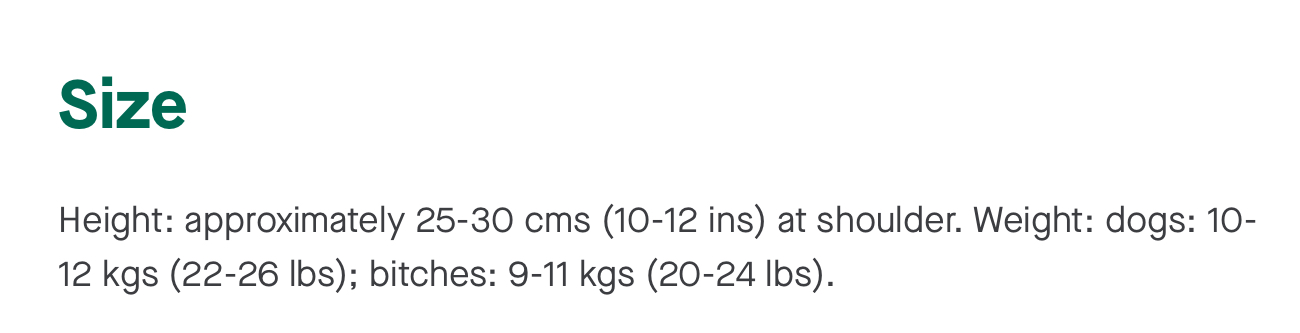
The Kennel Club – Welsh Corgi breed standards
Corgis were designed to be herding, or working dogs, hence the need for a smaller size. Their short height allows them to go under the radar, or rather, the kicks of cattle and sheep. To be a quick, athletic working breed that rounds up cattle and sheep, function was at the center of their breeding. So small and quick corgis were selected, not big and heavy. To put it in terms of human build, think lean runner, not heavy linebacker.
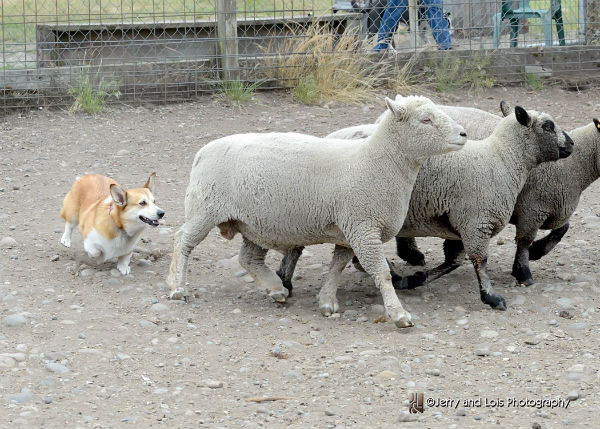
Their dwarf genetics mean Corgis have short legs, and longer backs. Their skeletal frame simply cannot withstand obesity, or even the larger sized frame that some bloodlines tend towards. The added weight from obesity or even just the larger frame, puts more weight on their bones, tendons, and muscle systems. The Pembroke Welsh Corgi breed tends towards issues such as Degenerative Myelopathy, DM, and Intervertebral Disc Disease (Type I), IVDD. Both have genetic components that can increase the risk of dogs developing these conditions, but genetics is not the only cause. (These diseases are both far more complex than just a genetic propensity, and deserve their own follow up, which we’ll get to in another post in the future)
The very nature of being a Corgi, their short legs and long back, not to mention their love of food, put them at risk for both DM and IVDD. And as stated, there is some genetic propensity involved in both, but weight, health, nutrition, and lifestyle all play roles as well.
It’s sometimes easier to blame faceless genetics for the reason a loved one’s corgi develops something like DM or IVDD, harder to look into a mirror and take on the culpability for our own contribution. But for the sake of four-legged companions, that is something we all need to do.
Social media perpetuates the idea that corgis are and should be larger. Think of the “endearing” terms thrown around for them: potatoes, loaves, or claiming they are “big-boned” or “thicc”. But these are not terms to aspire to. Would you rather have a round “loaf” that is unhappy, unhealthy, and unlikely to have a long life? Or would you rather have a lean, active, healthy, long-lived companion? At Diamond K, we choose the later.
You can discuss this need for keeping your Corgi at an appropriate weight, with most any small animal veterinarian. They experience firsthand, what larger sizes and increased weights produce in this breed. And our own 20 plus year history with the breed has taught us this lesson as well. We’ve had our own corgis successfully, and healthily, live to ages of 15 and even 16 years. Gus, lived to 16, and until the last couple weeks of his life, his biggest “health” issue was being fairly deaf the last 2 years, and some cataracts that developed in the last year of his life. Both of these were unavoidable age related issues.
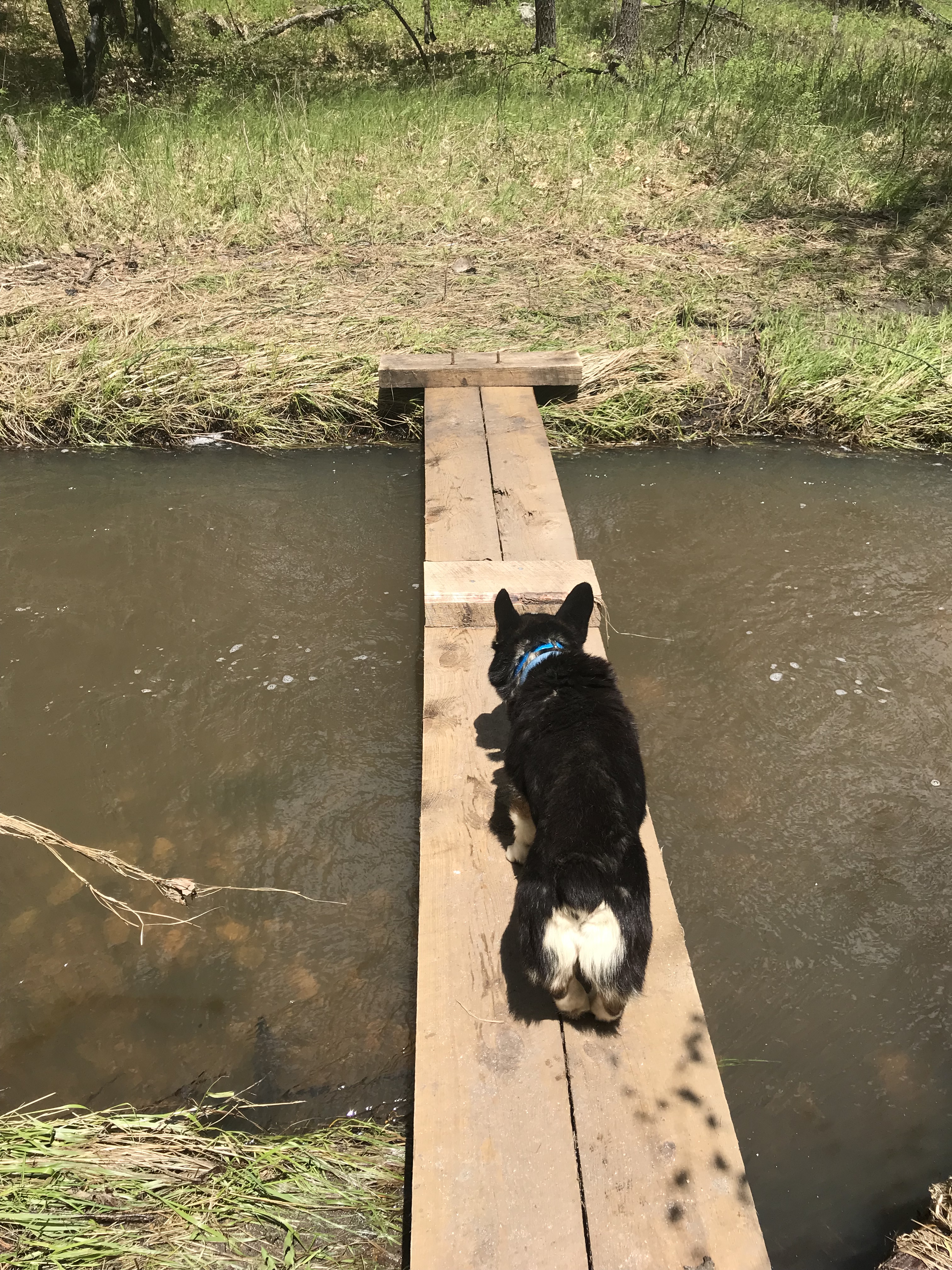
Gus was 15 here, one of his last hikes 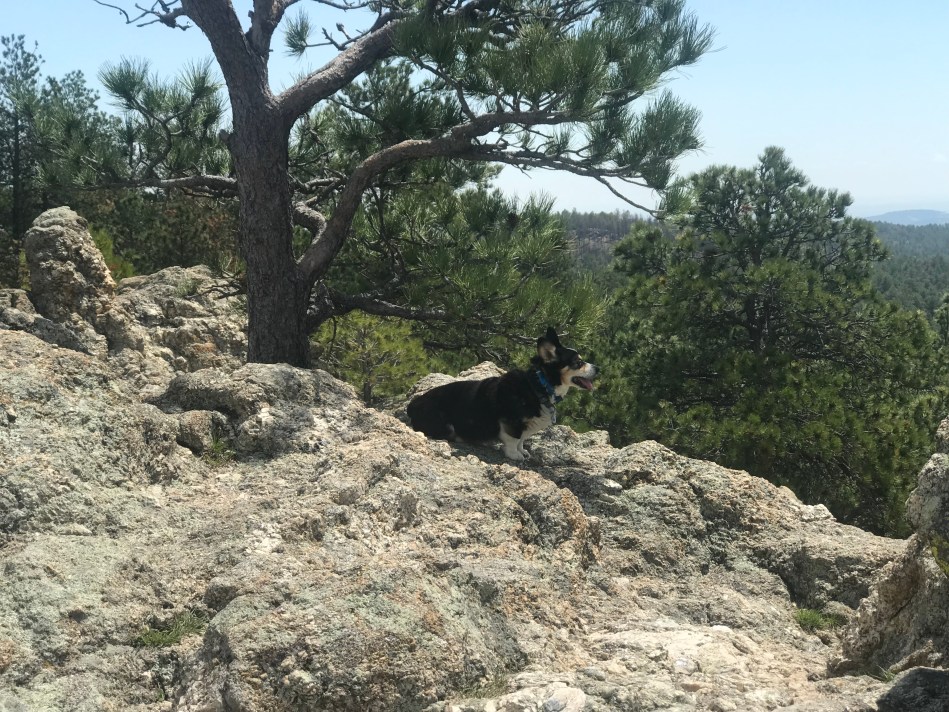
Gus was 15 here, one of his last hikes 
Gus was 15 here, one of his last hikes 
Gus was 15 here, one of his last hikes 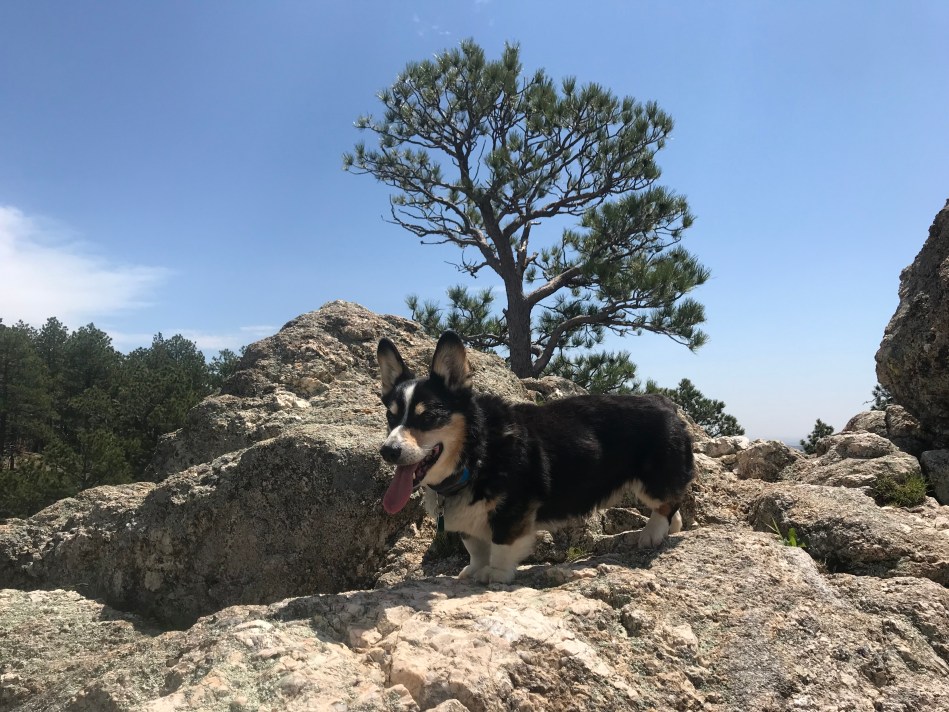
Gus was 15 here, one of his last hikes
Thus, we manage, genetically, to keep our Corgis healthier and sounder, by far, than a large portion of the Corgis, being raised today. Even the genetic tests we’ve had performed by Embark, back up the smaller predicated size our bloodlines. The trait predications that can be made from genetic labs today is fascinating, and also deserves its own future post.
Choosing, genetically, to the smaller size of this breed, results in healthier dogs, fewer veterinary bills, skipping the need for costly feed supplements, (to compensate for size related problems), and allows us to produce dogs with greater longevity.

We combine this genetic selectivity, with maintaining a high-health breeding herd, similar to the way we raised our livestock for many years.
We come from many generations, of both livestock, and canine expertise and experience.
We have also outfitted ourselves educationally, to best understand our genetic and health potentials and responsibilities, to create what our Diamond K families want and need.
Let us know if any of this raises any other questions, which you would like to explore with us.
DIAMOND K CORGIS


 Diamond K Corgis
Leave a comment